With the U.S. congressional elections approaching, Iranian officials describe a strategy of delaying negotiations and sustaining economic pressure on Washington. But Tehran's effort to gain political leverage is unfolding amid an increasingly severe economic crisis at home.
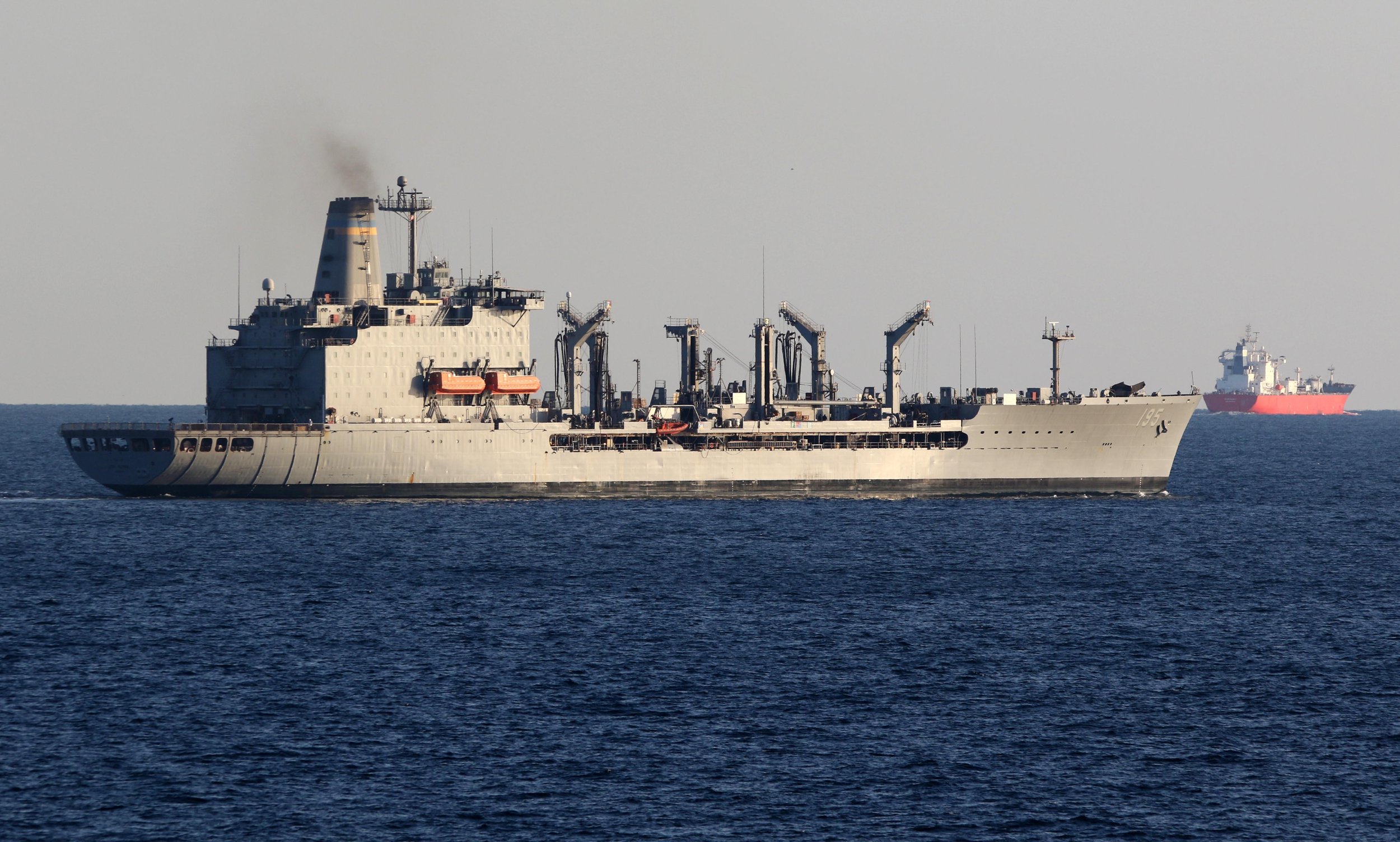
The U.S. Navy replenishment ship USNS Leroy Grumman transits the Strait of Hormuz in December 2020. The strategic waterway has become central to Iran's efforts to exert economic pressure on Washington ahead of the 2026 midterm elections.
Photo credit: U.S. Navy photo by Mass Communication Specialist 2nd Class Indra Beaufort. Public domain. Archival image, December 2020.
Iranian leaders appear to be treating the upcoming American midterm elections as an opportunity to strengthen their negotiating position with Washington, deliberately delaying a potential settlement while applying economic pressure through one of the world's most important energy shipping routes. But as Tehran attempts to exploit President Donald Trump's political vulnerabilities ahead of the November 3 elections, Iran's own economy continues to deteriorate, raising questions about how long its leadership can sustain the strategy and whether the anticipated political benefits will justify the costs.
An October 20 Reuters investigation, based on interviews with three senior Iranian officials and another Iranian insider, found that Tehran has deliberately prolonged negotiations in part to avoid giving Trump a diplomatic success before the midterms. The officials, who spoke anonymously, described growing expectations of renewed American and Israeli military strikes and a leadership increasingly prepared to continue the confrontation rather than accept an unfavorable agreement. One official told Reuters that Iran's clerical establishment was determined not to give Trump a political victory, suggesting that American electoral politics have become an active consideration in Tehran's wartime decision-making.
The reporting provides an unusually direct indication of how Iranian officials are approaching the political dimensions of the conflict, although it does not establish that the elections are the sole or even dominant reason negotiations have stalled. Washington and Tehran remain divided over substantial diplomatic and security issues, and Iran's distrust of American commitments predates the current electoral cycle. Nevertheless, when viewed alongside separate reporting on Iranian attacks against commercial shipping, the officials' accounts suggest that Tehran is attempting to convert the war's economic consequences into negotiating leverage at a moment of political sensitivity in Washington.
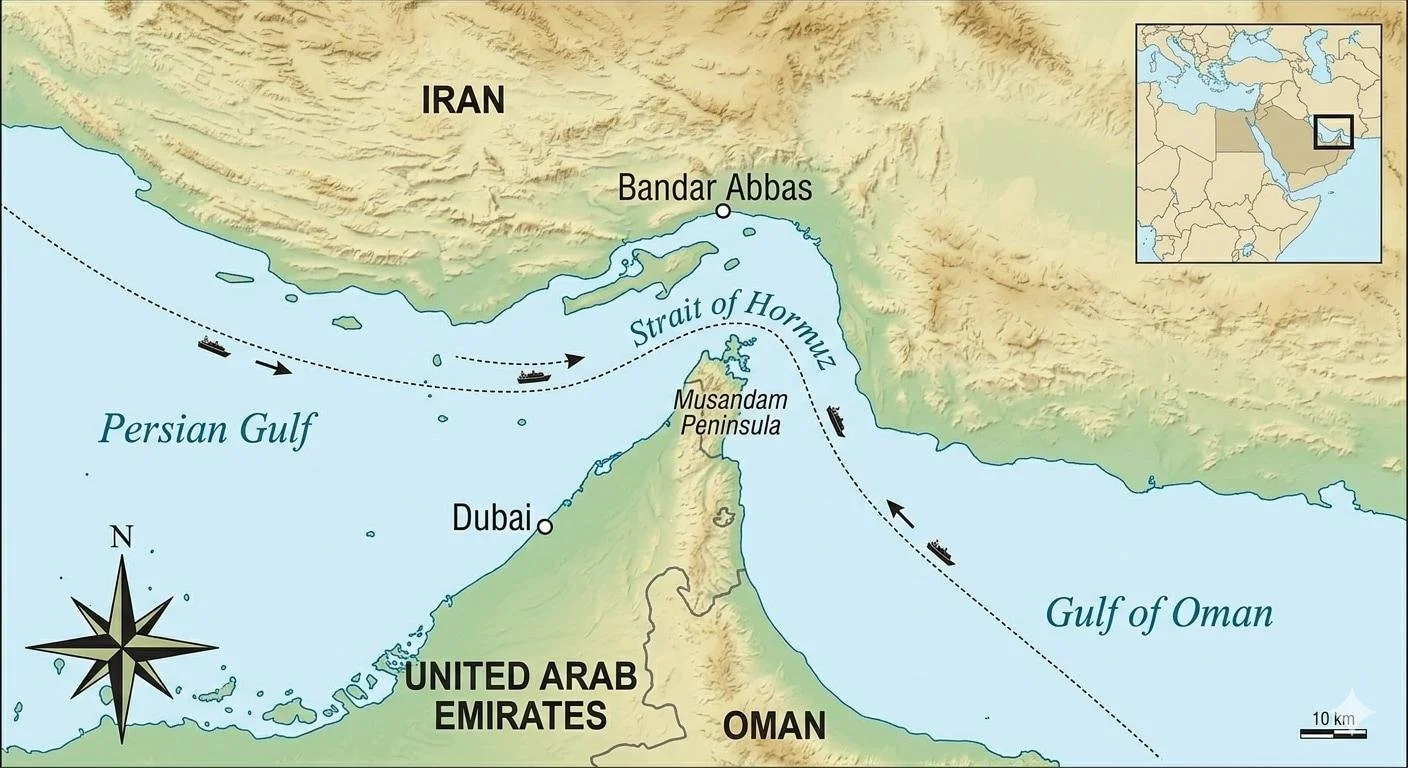
The Strait of Hormuz connects the Persian Gulf with the Gulf of Oman, providing a critical passage for international energy shipments. Disruptions to traffic through the strait can affect oil markets far beyond the Middle East.
Map credit: Goran_tek-en / Wikimedia Commons, CC BY-SA 4.0. Includes OpenStreetMap data.
The Strait of Hormuz: Economic Pressure as a Political Instrument
At the center of Iran's strategy is the Strait of Hormuz, the narrow maritime passage connecting the Persian Gulf to international shipping routes. Before the war, approximately one-fifth of global oil and liquefied natural gas trade passed through the strait, making any prolonged disruption a concern for energy markets far beyond the countries directly involved in the conflict. Since the United States and Israel began their military campaign against Iran on February 28, Tehran has restricted maritime traffic, threatened vessels attempting to transit without its approval, and used attacks on commercial ships to reinforce its control over the waterway.
The consequences extend well beyond the vessels directly targeted. Even when oil continues moving through the strait, the possibility of additional attacks increases shipping costs, complicates insurance arrangements, and introduces uncertainty into global energy markets. That uncertainty can contribute to higher fuel prices for consumers thousands of miles away, including Americans already facing increased costs for gasoline, transportation, and other necessities.
In an October 14 investigation, Reuters reported that two senior Iranian officials described changes in Iran's maritime operations intended, in part, to frustrate American efforts to lower oil prices ahead of the midterms. The officials described adjustments to both the types and frequency of attacks against commercial shipping, while separate reporting by The Washington Post, published October 19, found that Iranian officials viewed the weeks preceding the election as a particularly important period for applying pressure. The newspaper reported more than 20 attacks on vessels during October, including one that sank a ship, citing maritime monitoring data.
Taken together, the accounts suggest a strategy that does not necessarily require Iran to halt every shipment through Hormuz. Persistent threats, intermittent attacks, and the possibility of further escalation can be sufficient to discourage normal commercial activity and increase costs, particularly when shipping companies must account for the possibility of damage or loss. Iranian officials appear to believe that maintaining this uncertainty will increase political pressure on Washington and strengthen Tehran's position in negotiations over the blockade, sanctions relief, and the broader conflict.
There are, however, limits to the effectiveness of that approach. American military operations have helped restore some shipping through the strait, and maritime traffic has fluctuated rather than remaining completely suspended. Oil prices also respond to global supply, demand, inventories, and broader geopolitical developments, meaning that Iran cannot precisely control the economic consequences of its actions. While the available reporting supports the conclusion that Tehran is attempting to sustain pressure on energy markets, it does not establish how much of the resulting economic burden can be attributed to this particular electoral strategy.
Why the American Midterms Matter to Tehran
For President Trump, the political implications of the war extend beyond its military and diplomatic outcomes. American consumers have faced substantially higher fuel costs since the conflict began, while the administration has come under growing pressure to demonstrate progress toward a settlement. According to an Associated Press examination of consumer costs, published October 17, the national average gasoline price had risen approximately 45 percent from its prewar level, while diesel prices were up approximately 68 percent. Higher transportation and energy costs have also affected air travel, shipping, and some consumer goods, although the increases have not been uniform across the economy.
Iranian officials assessing the American political environment may therefore see an opportunity to capitalize on voters' economic concerns ahead of November 3. Sustained disruption in energy markets could make it more difficult for the administration to reassure Americans about economic conditions, particularly if voters associate those costs with the continuing conflict. Tehran may also believe that a change in congressional control would complicate Trump's ability to maintain his current approach, introducing additional political scrutiny and potentially limiting some of the administration's available options.
A different majority in the House of Representatives could expand investigations into the administration's conduct of the war, exercise oversight through congressional committees, scrutinize military operations, and influence spending decisions. Both chambers also retain constitutional responsibilities concerning military force, although the practical extent of congressional influence depends on the legislation, political circumstances, and support available for particular measures.
Those possibilities help explain why Iranian leaders might consider the elections strategically relevant, but they also expose an important limitation in Tehran's apparent calculation. Trump will remain president regardless of the congressional election results, retaining significant authority over diplomacy, sanctions administration, and military operations. Congressional opposition could create additional political or legal constraints, but it would not automatically end the war, lift the American blockade, or require Washington to accept Iranian demands. Even if the elections increase pressure on the administration, there is no guarantee that the pressure will translate into meaningful concessions.
A Diplomatic Stalemate That Predates the Election
Although the midterms appear to be influencing Tehran's calculations, the failure to reach an agreement cannot be explained solely by Iranian political maneuvering. The United States and Iran remain divided over fundamental questions concerning the sequence and substance of a potential settlement, particularly the relationship between economic relief, nuclear restrictions, and guarantees against renewed military action.
Washington wants Iran's nuclear program addressed from the beginning of negotiations, including meaningful limitations on uranium enrichment. Tehran, meanwhile, insists that the immediate priority should be ending the American maritime blockade, restoring access to oil revenues, releasing frozen assets, and securing an end to hostilities. Iran has offered to reopen the Strait of Hormuz within seven days if Washington accepts its conditions, a proposal Foreign Minister Abbas Araqchi reiterated on October 18, but the two governments have not resolved their disagreements over which concessions should come first.
The dispute reflects fundamentally different negotiating priorities. Washington wants assurances concerning Iran's nuclear capabilities before surrendering important economic leverage, while Tehran wants relief from the blockade and related restrictions before entering broader nuclear negotiations. Neither government appears willing to make the first major concession without confidence that the other will fulfill its commitments, leaving both sides in a position where maintaining pressure may appear less risky than compromising without sufficient guarantees.
Iran's reluctance is also shaped by earlier events that have reinforced its distrust of American security assurances. Israeli strikes in June 2025 interrupted preparations for another round of nuclear talks, while the February 2026 American-Israeli campaign began shortly after another negotiating round, with further technical discussions anticipated. Tehran cites those experiences as evidence that participating in negotiations does not necessarily protect it from subsequent military action, an argument that complicates efforts to persuade Iranian leaders to accept restrictions or concessions without enforceable assurances.
These concerns do not independently establish the Iranian government's interpretation of American intentions, nor do they eliminate Tehran's responsibility for its own military and diplomatic decisions. They do, however, identify substantive obstacles to an agreement that exist independently of the approaching elections. It is therefore possible that Iranian officials genuinely distrust the prospect of a durable settlement while simultaneously attempting to exploit the American political calendar to improve their negotiating position. Those explanations are not mutually exclusive, and the available evidence does not allow either one to account for the entire diplomatic stalemate.
The Economic Cost to Iran

Tehran's Grand Bazaar, photographed in 2019. Long before the current conflict, Iranian households and businesses were contending with economic sanctions, inflation, and a weakening currency. The war has intensified those pressures.
Photo credit: Brunobuisson / Wikimedia Commons, CC BY-SA 4.0. Archival photograph, August 2019.
While Iranian officials appear to believe that continued pressure will increase Washington's incentive to negotiate, the strategy is unfolding amid an increasingly severe economic crisis at home. Iran entered the current conflict with longstanding financial difficulties, including international sanctions, currency depreciation, and persistent inflation, all of which had already reduced purchasing power and limited economic opportunities for ordinary citizens. The war and renewed American economic restrictions have intensified those existing problems, reducing the government's access to foreign revenue while increasing the cost of goods and services across much of the economy.
According to the Statistical Centre of Iran, annual inflation reached 73.6 percent in September 2026, a figure comparing the average price level over the preceding twelve months with the average over the twelve months before that. A separate measure comparing September 2026 directly with September 2025 showed prices rising 89.8 percent, illustrating how rapidly purchasing power has deteriorated. For perspective, a basket of goods and services costing the equivalent of 100 units in September 2025 would cost approximately 190 units one year later if its prices followed that national year-over-year inflation measure. Individual products, including bread and other essentials, may have experienced different increases, but the broader consequence is the same: families whose incomes have not kept pace are finding it increasingly difficult to afford ordinary necessities.
The depreciation of Iran's currency has compounded those difficulties. Reuters reported on October 14 that the rial had lost nearly 35 percent of its value against the U.S. dollar since Washington reinstated its naval blockade in July, making imported products more expensive and placing additional pressure on businesses dependent on foreign materials and equipment. The blockade has also restricted one of the government's principal sources of revenue, with energy intelligence firm Vortexa reporting that Iran's seaborne crude oil exports fell to zero during the second week of September and remained at that level as of October 5. That measure concerns seaborne crude exports and does not establish that all Iranian oil-related trade had stopped, but it nevertheless illustrates the severity of the restrictions affecting Iran's ability to generate revenue from energy sales.
The effects are particularly consequential for ordinary Iranians, whose economic circumstances differ substantially from those of the officials making decisions about the conflict. In September interviews, Reuters documented households struggling with rising rent, medicine costs, unemployment, and declining purchasing power. One restaurant owner described being unable to increase prices because customers could no longer afford them, even as his own business faced growing financial pressure. Such experiences demonstrate how the economic consequences of prolonged confrontation extend beyond national financial statistics, affecting employment, household stability, and access to essential goods and services.
These conditions complicate the assumption that time necessarily benefits Tehran. Iranian leaders may believe that sustained disruption of energy markets will increase political pressure on Washington, but the same extended confrontation is placing additional strain on their own country's finances and population. The government may consider those costs strategically acceptable if it believes greater concessions will eventually follow, yet there is little reason to assume that ordinary Iranian citizens share the same assessment or possess the financial resources to endure the confrontation indefinitely.
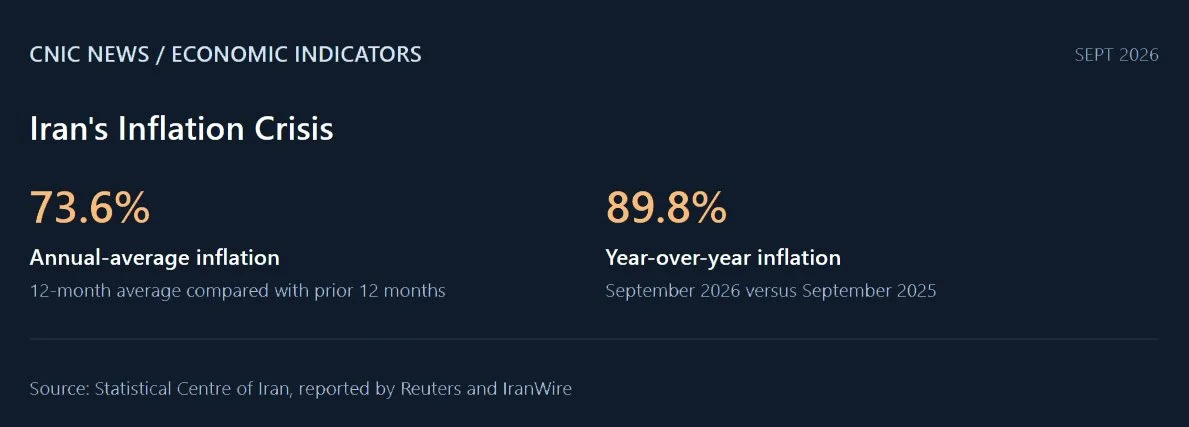
Iran's annual-average inflation reached 73.6% in September 2026, while prices were 89.8% higher than in September 2025. The figures measure different periods and illustrate the severity of Iran's inflation crisis.
Graphic credit: CNIC News. Data: Statistical Centre of Iran, as reported by Reuters and IranWire.
A Strategy With Uncertain Returns
Viewed together, the reporting suggests that Iran's approach involves more than waiting for a particular election result. Tehran appears to believe that sustained energy-market instability can increase Washington's incentive to negotiate, that a potential change in congressional control could introduce additional constraints on the administration, and that demonstrating Iran's ability to impose economic costs may strengthen its deterrent position beyond the immediate conflict.
That final consideration is particularly important because it would extend the strategy beyond the Trump administration. By demonstrating an ability to disrupt global energy markets even after sustaining significant military and economic damage, Iran may hope to convince American policymakers that future confrontations would remain costly regardless of the balance of conventional military power. Such a message could serve both negotiating and deterrent purposes, although the extent to which it influences American decision-making remains uncertain.
The weakness in the strategy is that imposing costs on an adversary does not guarantee obtaining political concessions. Economic pressure may increase incentives to negotiate, but it can also harden political positions, encourage retaliation, and make compromise more difficult if leaders conclude that concessions would reward coercion. Washington continues to maintain substantial economic restrictions and has signaled that additional military action remains possible after the elections, while Iranian officials continue to describe preparations for renewed attacks rather than assuming that a settlement is imminent. Both governments therefore retain reasons to maintain pressure even as the economic and humanitarian consequences grow.
Tehran may be calculating that it can withstand those consequences longer than Washington can tolerate the political fallout from higher energy prices. Whether that calculation is correct remains unclear, particularly given the difference between a temporary electoral deadline and the much longer economic recovery Iran would face even if the conflict ended. The United States possesses a substantially larger and more diversified economy, while Iran's ability to absorb prolonged losses is constrained by sanctions, reduced energy revenue, inflation, and currency depreciation. Those differences do not make Iranian leverage irrelevant, but they do suggest that the costs of sustaining the strategy are highly uneven.
CNIC Assessment: The Limits of Electoral Leverage
The available evidence supports the assessment that Iranian officials are incorporating the upcoming U.S. midterms into their diplomatic and economic strategy. Reuters has reported accounts from senior Iranian officials describing deliberate delays in negotiations intended, at least partly, to deny President Trump a political victory, while separate Reuters and Washington Post investigations have documented efforts to sustain pressure on international shipping and energy markets ahead of the election. Together, these reports provide a credible basis for concluding that American domestic politics have become one consideration in Tehran's approach to the conflict.
What the evidence does not establish is that electoral calculations are the sole or dominant cause of the continuing stalemate, or that Iranian leaders are deliberately prolonging every aspect of military hostilities for political advantage. The negotiating positions remain substantially divided, Tehran's security concerns are rooted in earlier events, and Washington has its own reasons for maintaining sanctions and demanding nuclear concessions. There is also insufficient evidence to conclude that Iran's actions will produce the political results its officials reportedly seek, particularly because a change in congressional control would not automatically compel the administration to alter its position.
The distinction between an actor's strategic intentions and the demonstrated effectiveness of its strategy is central to understanding the current situation. Tehran may believe that time is working against Trump, but the deterioration of Iran's economy means that the same passage of time is also working against Iranian households, businesses, and public finances. The officials making decisions about negotiations and military operations may be willing to accept those costs in pursuit of greater leverage, but their willingness does not establish that the strategy is sustainable or that its eventual benefits will outweigh the damage.
Over the next two weeks, several developments will be particularly important in assessing Tehran's approach: whether attacks on commercial shipping intensify or diminish, whether negotiations advance beyond the disagreement over the order of concessions, and whether either government adjusts its position as economic pressure continues. The election itself may alter the political environment in Washington, but a meaningful diplomatic breakthrough would still require concessions, enforceable arrangements, and sufficient confidence that an agreement could survive the distrust created by the conflict.
For now, Iran appears to be betting that prolonging the diplomatic stalemate will improve its leverage over Washington, even as the economic consequences become increasingly severe at home. The more consequential uncertainty is not whether Tehran can maintain pressure until the American elections, but whether doing so will produce a more favorable settlement—or simply extend a confrontation that Iran itself can increasingly ill afford.
Sources and Methodology
This assessment draws on publicly available reporting, economic data, and official statements available through October 20, 2026. Descriptions of Iranian leadership intentions rely in part on anonymous officials interviewed by established news organizations and should be understood as reported accounts rather than independently verified internal government decisions.
Reuters | October 20, 2026. Iran prolongs talks in stalemate to influence US midterms, officials say — Iranian officials' accounts of negotiating strategy, distrust, diplomatic demands, and economic pressures.
Reuters | October 14, 2026. Iran shifting tactics to step up attacks on shipping before US vote, officials say — Maritime operations, pressure on energy markets, and the reported objectives of Iranian officials.
The Washington Post | October 19, 2026. Tehran seeks to punish Trump in midterms with oil price pain, Iranian officials say — Independent reporting on Iranian political calculations and maritime attacks.
Reuters | October 18, 2026. Iran urges US to accept proposal to reopen Strait of Hormuz — Iran's negotiating conditions and the dispute over nuclear concessions.
Reuters | October 14, 2026. Iran's central bank governor dismisses claims of economic collapse amid US blockade — Inflation, currency depreciation, and seaborne crude oil exports, citing the Statistical Centre of Iran, Bonbast, and Vortexa.
IranWire | October 1, 2026. Iran's Inflation Reaches 89.8% in September: Statistical Center — Explanation of Iran's year-over-year and annual-average inflation figures.
Reuters | September 29, 2026. Iranians stagger under soaring costs of seven months of war — Interviews documenting the economic effects on Iranian residents and businesses.
Associated Press | October 17, 2026. Shoppers don't see the full brunt of US fuel costs. That could change — U.S. consumer costs, fuel prices, and the economic effects of the conflict.
CNIC News' analysis is based on the cited public record. CNIC did not independently interview the anonymous officials identified in the underlying reporting.