What lessons can the U.S. military learn from Iran's response to U.S. strikes?
(Note: Originally published on Quora on June 30, 2025)
The United States attacked Iran on June 21, 2025. The attack was named “Operation Midnight Hammer” and involved striking three Iranian nuclear sites: Fordow, Natanz, and Isfahan. The stated purpose of the attacks was to prevent Iran from continuing their nuclear program. (1)
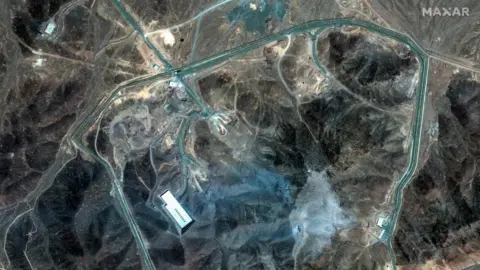
During the attack, Iran did not scramble their jets, or attempt to fire upon the attacking bombers or their jet escorts. This confirms:
1. The Iranian Air Force is composed of old and outdated aircraft. It would have been a suicide mission to attack US aircraft. Their pilots don’t have the training or the flight hours, and financial constraints due to sanctions have left their air force as little more than props. (2)
2. Iran relies heavily on ground-based air defense, which were known to have been targeted in recent weeks by the Israelis. Their inability to counterattack was likely a result of their air defense capabilities being severely weakened by those attacks. (3)
After Operation Midnight Hammer, Iran launched missiles at Al Udeid Air Base in Qatar. Iran fired more than a dozen short and medium range ballistic missiles, nearly all intercepted, resulting in no casualties.The international intelligence community expected just such an attack as Iran was expected to respond in a way that would avoid escalating the situation. Iran needed to respond in order to avoid appearing weak, but a larger response would have been met with an even larger response from the vastly more capable US military. Not long after these attacks, Iran and Israel agreed to a ceasefire. (4)
Note that the immediate Iranian response does not in any way prevent a further, more calculated response, more in line with Iran’s asymmetric capabilities. It is very likely the Iranians moved some of their nuclear materials prior to the US attack, and they will likely continue their nuclear program. The intelligence community is mindful of several potential threats, including:
Iran potentially having sleeper cells in the US.
Iran continuing attacks on Israel or US bases in the region.
Iran disrupting global oil trade with an attack on the strait of Hormuz.
Iran-backed Houthi rebels could attack American ships in the Red Sea (something they threatened to do if the US helps Israel)
Cyber attacks, including DDOS, website defacements, or targeting of power grids and transportation networks.
In short, the response of the Iranians (to date) has been in line with long-standing assessments of Iran’s military capabilities. The longer term aspects of this conflict could result in an updated assessment, but Iran’s interest in avoiding direct conflict with the US makes further escalation unlikely.
What we know about US air strikes on three Iranian nuclear sites
Israel-Iran escalation: How strong is Israel's military? – DW – 04/18/2024
https://www.nytimes.com/live/2024/04/20/world/israel-iran-gaza-war-news?smid=url-share
How Qatar defused Iran’s attack on the largest US-run base in the region | CNN
John Days | Senior Analyst | CNIC